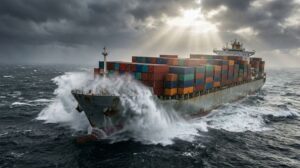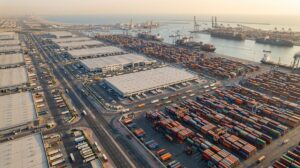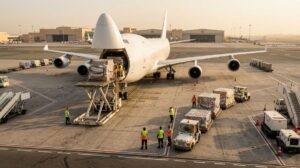

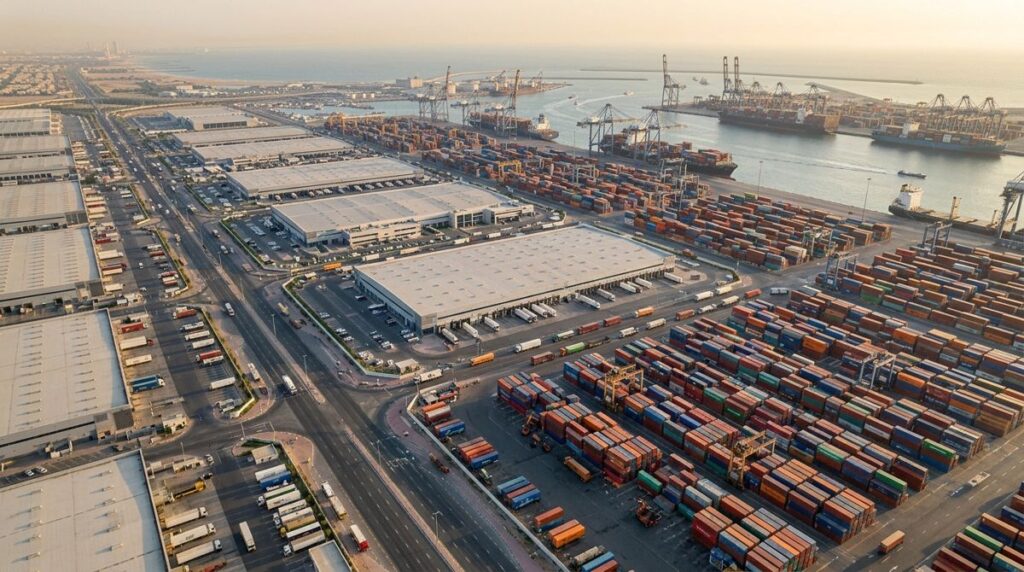
Re-export from Dubai means bringing goods into the UAE and then sending them on to another country, usually without changing them. It is one of the biggest parts of Dubai’s trade: traders buy in bulk from China, India or Europe, store the goods in Dubai, and sell them on to buyers across the Gulf, Iran, Iraq, Africa, Central Asia and beyond.
Dubai works so well as a re-export hub because of Jebel Ali Port, large free zones such as JAFZA, fast customs clearance and frequent sailings and flights to almost every market in the region. Done correctly, re-exported goods can pass through Dubai without paying UAE customs duty.
Key takeaways
- There are 3 common routes: free zone, mainland import then re-export, and transit.
- Duty treatment depends on the route; confirm it with Dubai Customs or your free zone authority before the goods arrive.
- The certificate of origin shows where the goods were made, not the UAE.
- Check dual-use rules and sanctions before you buy stock for re-export.
In this guide
3 Ways to Re-Export from Dubai
| Route | How it works | UAE duty | Best for |
|---|---|---|---|
| Free zone | Goods land at Jebel Ali and move straight into a free zone such as JAFZA, are stored, repacked if needed, then exported | Depends on free zone rules; confirm with the free zone authority | Regular traders who hold stock in Dubai |
| Mainland import, then re-export | Goods are imported into mainland Dubai with duty paid, then exported later | Paid on import; a refund may be available under Dubai Customs rules, so check the conditions before you rely on it | Companies that sell some goods locally and re-export the rest |
| Transit (through-shipment) | Goods arrive at Jebel Ali or Dubai airport and move directly to another country under a customs transit declaration, usually backed by a guarantee | Handled under the transit declaration; confirm the conditions with Dubai Customs | One-off shipments that pass through Dubai on their way to a final buyer |
Free Zone Re-Export
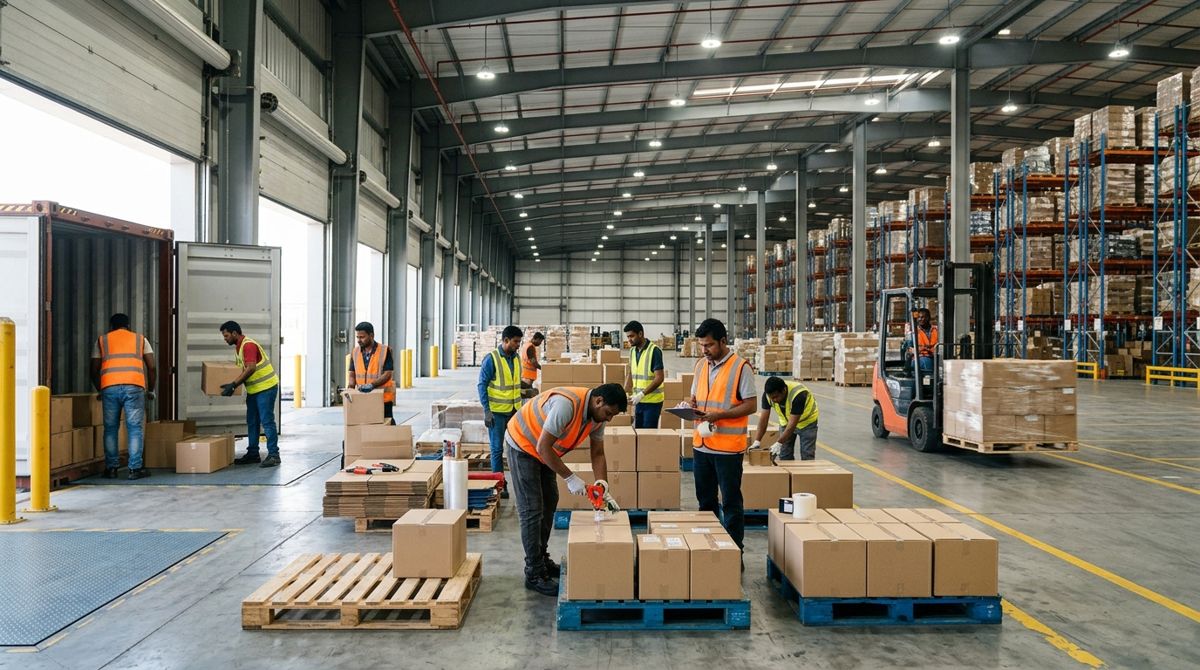
Free zones are the most popular route. Goods can be stored for long periods, split into smaller lots, relabelled and sold to buyers in several countries. You need a free zone company or a logistics partner with a free zone licence and warehouse.
Mainland Re-Export
Useful if you already have a mainland trading licence. Duty is paid on arrival. Whether and when it can be refunded after re-export depends on Dubai Customs rules, so check the conditions with Dubai Customs first.
Transit and Transshipment
Transit suits goods that only pass through Dubai, for example cargo from China going by road to Oman or by sea to East Africa. Read more about how this works in our guide to transshipment.
Documents Needed for Re-Export
| Document | Why it is needed |
|---|---|
| Original import documents (bill of lading or air waybill, import or transfer declaration) | Prove how and when the goods entered the UAE or the free zone |
| Commercial invoice for the re-export sale | Shows the value, buyer and description for the destination customs |
| Packing list | Must match the cartons, weights and marks actually shipped |
| Re-export or exit declaration | Filed with Dubai Customs (or the free zone authority) to release the goods out of the UAE |
| Certificate of origin | Usually requested by the buyer’s customs; for re-exports it states the goods’ original country of manufacture |
| Customs client code and trade or free zone licence | Your company, or your forwarder, must be registered to file declarations |
Declarations are filed electronically with Dubai Customs, either by your company or by your forwarder on your behalf.
Certificate of Origin for Re-Exported Goods
Goods do not become “Made in UAE” just because they pass through Dubai. The certificate of origin for a re-export shows where the goods were originally made, for example China or India, and is issued through the Dubai Chamber of Commerce. See our guide to the certificate of origin.
What About VAT?
Exports of goods from the UAE to a country outside the GCC are generally zero-rated for VAT, provided you keep official proof of export. Goods held in certain designated free zones can also be treated as outside the UAE for VAT purposes. The rules have conditions, so confirm your case with a tax adviser or the Federal Tax Authority.
How to Re-Export from Dubai: Step by Step
- Plan the route before the goods arrive. Decide whether the cargo goes into a free zone, into mainland Dubai or straight through in transit. Changing later costs time and money.
- Ship to Jebel Ali or Dubai airport with documents that name the right consignee for that route.
- Declare the goods on arrival: a transfer into the free zone, a mainland import, or a transit declaration.
- Store, sort or repack in the free zone or warehouse if you are splitting the cargo for several buyers.
- Prepare the re-export documents: invoice, packing list, certificate of origin and the exit declaration.
- Book onward transport: sea freight, air freight or trucking by land to the GCC.
- Exit customs clearance and departure from the UAE.
- Keep proof of export for your customs and VAT records.
Popular Re-Export Markets from Dubai
| Region | Typical markets | Usual mode from Dubai | Our route pages |
|---|---|---|---|
| Iran and Iraq | Bandar Abbas, Umm Qasr, Baghdad | Sea, land | Dubai to Iran, Dubai to Iraq |
| Afghanistan and Central Asia | Kabul, Tashkent, Almaty, Ashgabat | Sea and road via Iran or Pakistan, air | Dubai to Afghanistan, UAE to Uzbekistan |
| Russia and CIS | Moscow, Novorossiysk, St Petersburg | Sea, multimodal | Dubai to Russia |
| East Africa | Mombasa, Dar es Salaam, Djibouti, Berbera | Sea | UAE to Tanzania, UAE to Ethiopia |
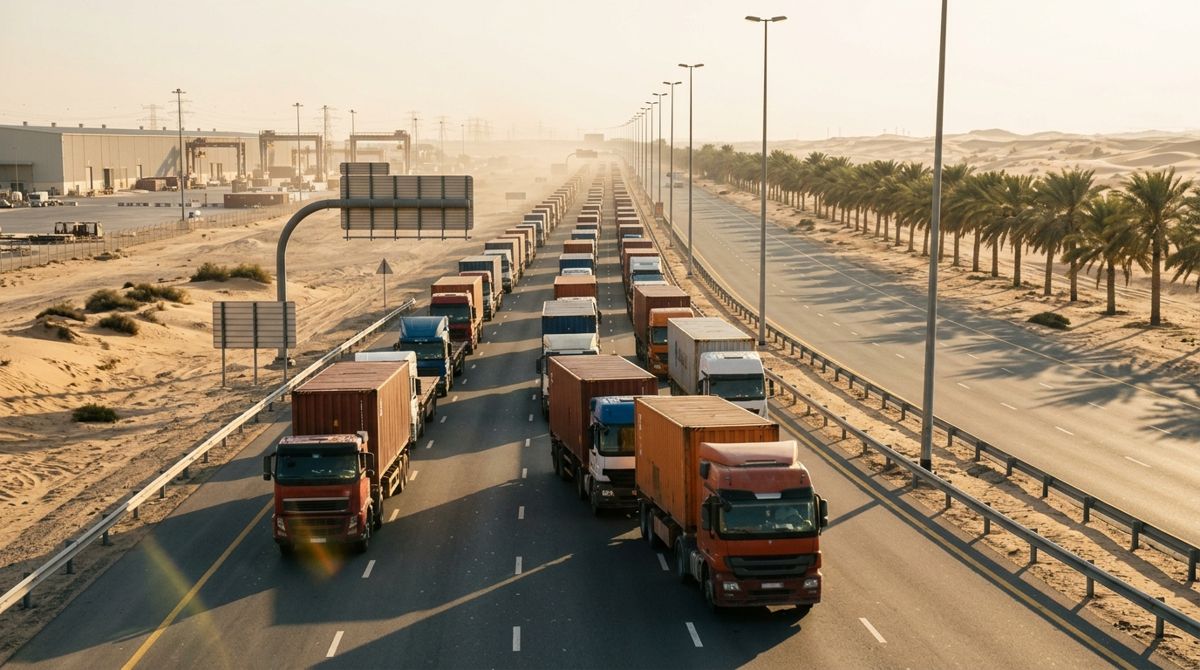
| GCC | Saudi Arabia, Oman, Qatar, Kuwait, Bahrain | Land freight | Land freight |
Compliance: Restricted Goods and Sanctions
Re-export does not mean “no rules”. Before you sell goods on from Dubai, check three things:
- Is the product controlled? Dual-use goods (items with both civilian and military uses, such as some electronics, chemicals and machinery) need approval from the UAE authorities before export.
- Is the destination or buyer under sanctions? The UAE enforces UN sanctions, and shipping lines, insurers and banks often apply their own rules on top. A shipment that is legal to export can still be refused by a carrier or blocked at the bank.
- Does the destination need special certificates? Many countries require conformity certificates, import permits or pre-shipment inspection for certain goods.
When in doubt, ask before you buy the stock, not after it has arrived in Dubai.
6 Common Re-Export Mistakes
- Importing into mainland by default when the goods were always meant for re-export, then paying duty you could have avoided.
- Wrong consignee on the original bill of lading, which makes the free zone transfer or transit difficult.
- Changing the goods’ description or quantities between the import and the re-export documents. Customs will compare them.
- Labelling re-exported goods as UAE origin. The certificate of origin must show the real country of manufacture.
- Not checking duty refund conditions with Dubai Customs before importing into mainland.
- Not keeping proof of export for your customs and VAT records.
Re-Export with Alliance Shipping
Alliance Shipping offers sea, air and land freight services from Dubai.
- Inbound sea freight and air freight from China, India, Europe and beyond
- Onward shipping by sea, air or land freight
Planning a Re-Export Shipment?
Send us your cargo details to request a quote.
Call or WhatsApp +971 56 649 5103 · manager.dxb@theallianceshipping.com
Frequently Asked Questions
What Does Re-Export from Dubai Mean?
It means importing goods into the UAE, often into a free zone, and then exporting them to another country, usually without changing them.
Do I Pay Customs Duty on Re-Exported Goods in Dubai?
It depends on the route: free zone, mainland import or transit. Confirm the duty treatment and any refund conditions with Dubai Customs or your free zone authority before the goods arrive.
Do I Need a Free Zone Company to Re-Export?
No. You can also re-export from a mainland company, or use a forwarder with the right licences to handle transit. A free zone company is useful if you trade regularly and hold stock in Dubai.
What Certificate of Origin Do I Need for Re-Exported Goods?
The certificate must show the original country of manufacture, not the UAE, and is issued through the chamber of commerce.
How Long Can Goods Stay in a Dubai Free Zone?
Goods can usually be stored in a free zone for long periods while you find buyers. Check the specific rules of your free zone and warehouse operator.
Can I Split One Container into Shipments for Several Countries?
Yes. This is one of the main benefits of re-exporting through a Dubai free zone: you can deconsolidate, repack and ship to different buyers by sea, air or road.