
Cargo insurance in UAE is one of the most overlooked costs in shipping, and one of the cheapest. Many importers assume the shipping line or airline will pay if their goods are lost or damaged. In reality, carriers are only liable in limited situations, and even then their payout is capped by international conventions, often at a fraction of what the goods are worth.
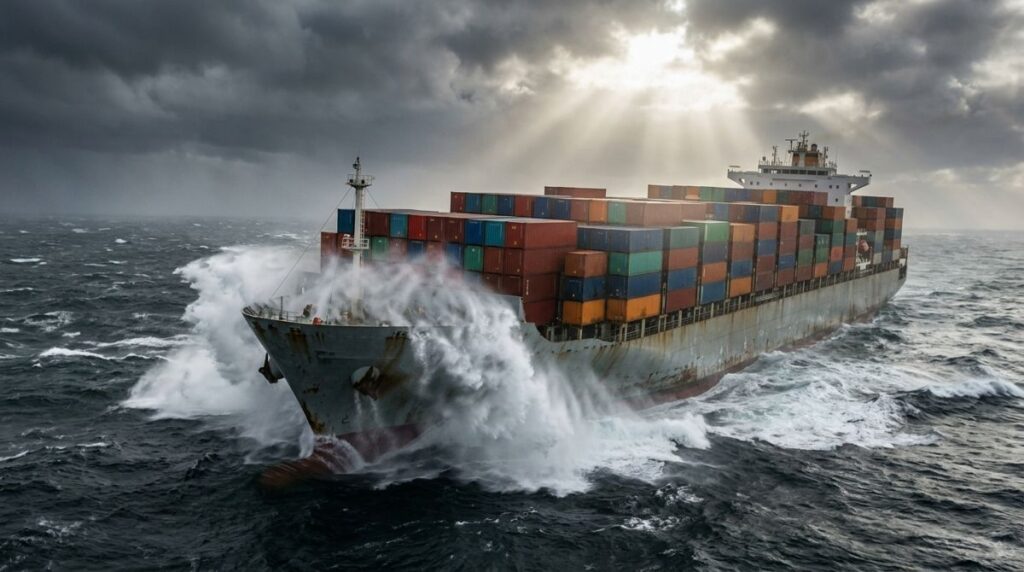
Containers fall overboard in storms, cargo gets wet, pallets are crushed during handling, and whole ships can be caught up in fires or groundings. Without insurance, one bad voyage can wipe out the profit on many shipments.
Key takeaways
- Carriers pay at most 26 SDR per kg by air and 666.67 SDR per package or 2 SDR per kg by sea, and often nothing.
- ICC (A) is all-risks cover; ICC (C) covers only major disasters.
- Insure for the CIF value plus 10%; the premium is a percentage of that.
- Report damage on the delivery receipt and notify in writing within days.
In this guide
Why Carrier Liability Is Not Enough
Carriers are not insurers. Under the international rules, they can often avoid paying at all, for example when loss is caused by bad weather at sea, fire, or poor packing. When they are liable, the amount is capped:
| Mode | Rule that usually applies | Maximum the carrier pays |
|---|---|---|
| Sea | Hague-Visby Rules (incorporated in most bills of lading) | 666.67 SDR per package or 2 SDR per kg, whichever is higher |
| Air | Montreal Convention (limits revised in December 2024) | 26 SDR per kg |
| Road (international) | CMR Convention | 8.33 SDR per kg |
SDR (Special Drawing Rights) is a unit set by the IMF. Its value changes daily; in recent years 1 SDR has been worth roughly USD 1.30 to 1.40. You can read more about the Hague-Visby package limits and the 2024 Montreal Convention revision.
Worked Example: A Pallet of Mobile Phones by Air
| Item | Value |
|---|---|
| Goods value | USD 60,000 |
| Weight | 500 kg |
| Carrier’s maximum liability | 500 kg × 26 SDR = 13,000 SDR, about USD 17,500 |
| Your loss if the pallet is stolen | About USD 42,500, even if the airline accepts the claim |
The “One Container, One Package” Trap
At sea, the limit per package depends on how the bill of lading describes the cargo. If it says “1 x 40ft container, said to contain general cargo” instead of listing the number of cartons, the whole container may count as one package, so the carrier’s limit could be as low as 666.67 SDR, or 2 SDR per kg of the gross weight if that is higher. Always make sure the number of packages is written on the bill of lading.
Types of Cargo Insurance in UAE: ICC A, B and C
Most marine cargo policies in the UAE and worldwide are based on the Institute Cargo Clauses (ICC). There are three levels:
| Cover | What it covers | Good for |
|---|---|---|
| ICC (A), “all risks” | All risks of loss or damage, except listed exclusions such as poor packing, inherent vice, delay and wilful misconduct | Most general cargo, electronics, machinery, consumer goods |
| ICC (B) | Named perils: fire, explosion, sinking, collision, earthquake, washing overboard, seawater entering the container, and packages dropped during loading | Bulk or robust goods where theft and handling damage are less likely |
| ICC (C) | The narrowest: major casualties only, such as fire, sinking, collision and jettison | Low-value cargo; it is also the minimum required under CIF |
War and strikes risks are excluded by default and are added with separate clauses. Ask for them if your cargo passes through high-risk areas.
Single Shipment or Open Cover?
- Single shipment policy: you insure each shipment separately. Good for occasional shippers.
- Open cover (annual policy): every shipment you declare during the year is covered automatically at agreed rates. Good for regular importers, and you never forget to insure a shipment.
General Average: The Risk Most People Have Never Heard Of
If a ship faces danger, for example a fire on board, the master may sacrifice some cargo or pay for salvage to save the voyage. Under the general average rules, every cargo owner on the ship shares that cost in proportion to the value of their goods, even if their own cargo was undamaged.
If you are insured, your insurer provides a guarantee and your cargo is released. If you are not, you may have to pay a cash deposit, sometimes a large share of your cargo’s value, before you can collect your goods.
How Much Does Cargo Insurance Cost?
The premium is a percentage of the insured value. The usual insured value is the CIF value (cost of goods + insurance + freight) plus 10%, which covers extra costs and lost profit if the goods have to be replaced.
| Step | Example |
|---|---|
| Goods value | USD 50,000 |
| Freight | USD 3,000 |
| CIF value (approx.) | USD 53,000 |
| Insured value (CIF + 10%) | USD 58,300 |
The premium is the insured value multiplied by the rate your insurer quotes. That rate depends on:

- Type of goods: phones, electronics and fragile items cost more; robust goods cost less.
- Packing: proper export packing lowers the rate and reduces rejected claims.
- Route and mode: high-risk routes and long transshipments cost more.
- Cover level: ICC (A) costs more than (B) or (C).
- New or used goods: used goods are often only insurable on restricted terms.
Most insurers also charge a minimum premium per shipment, so small shipments cost proportionally more. Compared with the value at risk, it is almost always worth it.
Who Should Buy the Insurance?
It depends on your Incoterm. Under CIF, the seller must insure, but only to the minimum ICC (C) level. Under CIP, the seller must provide ICC (A). Under EXW and FOB, insurance is your responsibility from the moment the risk passes to you. If you buy CIF but want full cover, take out your own ICC (A) policy as well.
How to Make a Cargo Insurance Claim
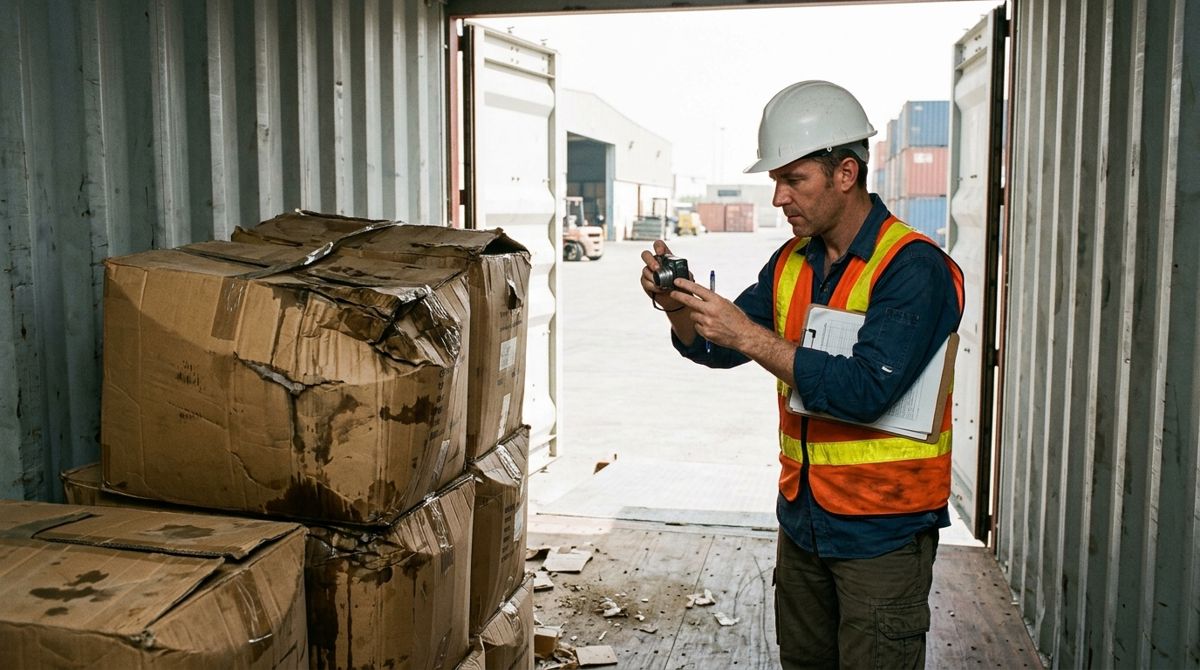
- Inspect the cargo on delivery, before the driver leaves if possible.
- Note any damage or shortage on the delivery receipt. Never sign it “clean” if cartons are wet, crushed or missing.
- Take photos of the container seal, the container, the packaging and the damaged goods. Do not throw anything away.
- Notify your insurer and the carrier in writing straight away. Time limits for notice are short, so check your policy and the carrier’s terms and report as soon as you find the damage.
- Arrange a survey if the insurer asks for one, before repairing, selling or destroying the goods.
- Submit the claim documents: policy or certificate, commercial invoice, packing list, bill of lading or air waybill, delivery receipt, photos, survey report and your written notice to the carrier.
- Let the insurer recover from the carrier. Once you are paid, the insurer usually pursues the carrier for you.
5 Reasons Cargo Claims Get Rejected
- Insufficient packing: goods packed for local delivery, not for a sea voyage.
- Late notice: the claim was reported weeks after delivery.
- A clean delivery receipt: signed without noting the damage.
- Wrong cover: theft or water damage claimed on a restricted ICC (C) policy.
- No insurance in place when the loss happened: for example, the policy started at the port but the goods were damaged in the truck on the way there.
Ship Safely with Alliance Shipping
Alliance Shipping offers sea, air and land freight services:
- Sea freight, air freight and land freight
- Live shipment tracking
Plan Your Next Shipment
Send us your cargo details to request a quote.
Call or WhatsApp +971 56 649 5103 · manager.dxb@theallianceshipping.com
Frequently Asked Questions
Is Cargo Insurance in UAE Mandatory?
No, it is not required by law for most shipments, but your sales contract, Incoterm, bank or letter of credit may require it. Without it, you carry the risk yourself.
Doesn’t the Shipping Line Already Insure My Cargo?
No. The carrier’s liability is limited by international rules, it can often avoid paying at all, and its maximum payout is usually far below the value of your goods.
How Much Does Cargo Insurance Cost?
It is a small percentage of the insured value, which is usually the CIF value plus 10%. The exact rate depends on the goods, packing, route and level of cover.
What Is the Difference Between ICC (A) and ICC (C)?
ICC (A) covers all risks except listed exclusions. ICC (C) only covers major events such as fire, sinking and collision, so theft, rain damage and handling damage are not covered.
What Is General Average?
It is a maritime rule under which all cargo owners share the cost of saving a ship in an emergency. Insured cargo owners are protected by their insurer’s guarantee; uninsured owners may have to pay a deposit before their goods are released.
When Should I Report Damaged Cargo?
Immediately. Note the damage on the delivery receipt, take photos, and notify the insurer and carrier in writing within days. Late notice is one of the most common reasons claims fail.