

Incoterms explained in one sentence: they are the three-letter codes on your supplier’s quote, such as FOB, CIF or DDP, that decide who pays for each part of the journey and who carries the risk if something goes wrong.
They are published by the International Chamber of Commerce (ICC). The current version, Incoterms 2020, has 11 terms. Every UAE importer sees them on proforma invoices, yet many only discover what they agreed to when unexpected charges arrive at Jebel Ali.
Key takeaways
- Incoterms decide who pays each cost and where the risk passes.
- There are 11 terms in Incoterms 2020; 4 of them sit only with sea freight.
- For most Dubai importers, FOB (sea) or FCA (air) with your own forwarder gives the best control and price.
- CIF stops at Jebel Ali: port charges, customs, duty and delivery are still yours.
In this guide
Incoterms Explained: All 11 Incoterms 2020 at a Glance
Each Incoterm answers two questions: who pays for each step, and where the risk passes from seller to buyer. These are not always the same place, which is the main source of confusion.
Terms for Any Mode of Transport (Sea, Air, Road)
| Term | Full name | Seller pays up to | Risk passes to buyer |
|---|---|---|---|
| EXW | Ex Works | Goods ready at the seller’s premises | At the seller’s premises |
| FCA | Free Carrier | Goods handed to the buyer’s carrier, export cleared | When handed to the carrier |
| CPT | Carriage Paid To | Freight to the named destination | When handed to the first carrier |
| CIP | Carriage and Insurance Paid To | Freight plus all-risk insurance to the destination | When handed to the first carrier |
| DAP | Delivered at Place | Delivery to the named place, ready for unloading | At the destination, before unloading |
| DPU | Delivered at Place Unloaded | Delivery and unloading at the named place | At the destination, after unloading |
| DDP | Delivered Duty Paid | Everything, including import duty and taxes | At the destination, cleared for import |
Terms for Sea and Inland Waterway Only
| Term | Full name | Seller pays up to | Risk passes to buyer |
|---|---|---|---|
| FAS | Free Alongside Ship | Goods placed alongside the ship at the origin port | Alongside the ship |
| FOB | Free on Board | Goods loaded on board at the origin port | Once on board at origin |
| CFR | Cost and Freight | Ocean freight to the destination port | Once on board at origin |
| CIF | Cost, Insurance and Freight | Ocean freight plus minimum insurance to the destination port | Once on board at origin |
The key point: with CFR and CIF, the seller pays the freight to Jebel Ali, but the risk becomes yours the moment the goods are loaded in the origin port.
The 4 Incoterms UAE Importers Use Most
The examples below use the same order: 300 cartons of furniture from a factory in Foshan, China, shipped to a warehouse in Dubai through Jebel Ali Port.
EXW (Ex Works)
The supplier only gets the goods ready at the factory gate. You pay for everything else: pickup, Chinese export clearance, loading, ocean freight, Jebel Ali charges, UAE customs and delivery.
- Pros: lowest product price; full control.
- Cons: you need a forwarder in China to collect the goods and handle export customs, which a foreign buyer cannot always do alone.
FOB (Free on Board)
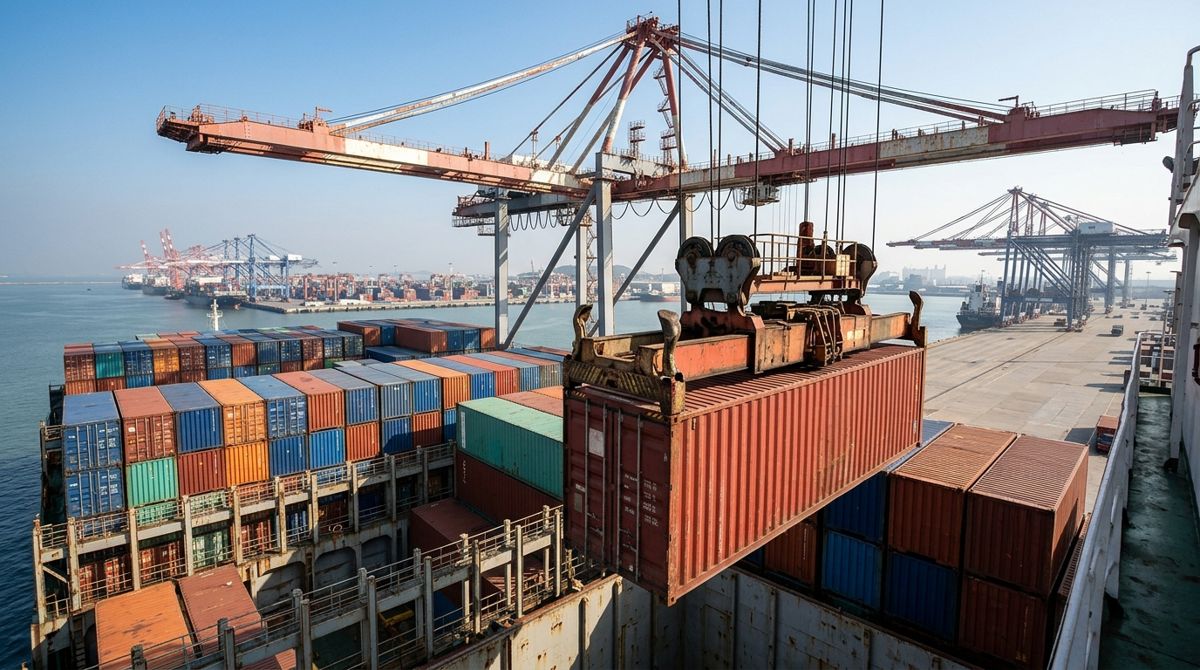
The supplier delivers the goods to the port (for example Shenzhen), clears them for export and loads them on the ship. You pay from that point: ocean freight, Jebel Ali charges, customs and delivery.
- Pros: the supplier handles the hard part in China; you choose the shipping line and forwarder and see the real freight cost.
- Cons: you must book the freight yourself or through a forwarder.
FOB is the most common and usually the best value for UAE importers buying by sea.
CIF (Cost, Insurance and Freight)
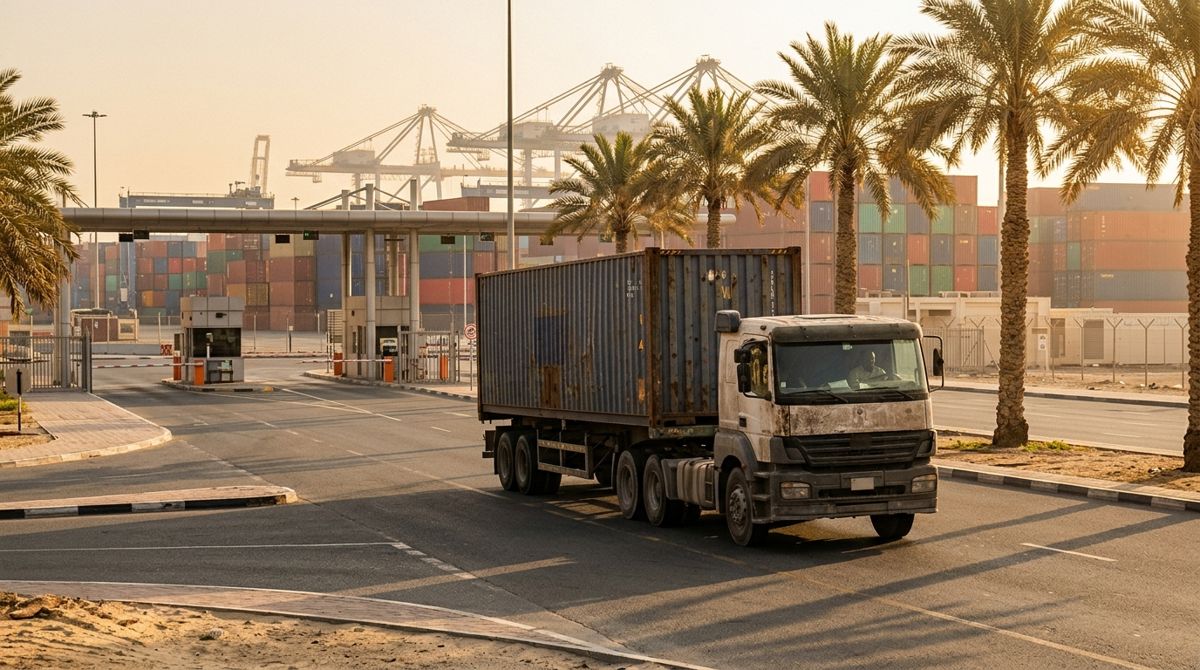
The supplier pays the ocean freight and basic insurance to Jebel Ali Port. You pay from arrival: terminal handling, delivery order, customs clearance, duty and delivery. Dubai Customs calculates import duty on the CIF value, so you will hear “CIF Jebel Ali” a lot.
- Pros: simple; one price to the destination port.
- Cons: the supplier chooses the carrier. Low CIF prices are sometimes recovered through high destination charges at Jebel Ali, and the insurance is only minimum cover.
DDP (Delivered Duty Paid)
The supplier, or their agent, delivers to your door in Dubai with duty and VAT already paid. You pay nothing extra, in theory.
- Pros: easiest option; good for small orders and first-time importers.
- Cons: highest price, little visibility of costs, and the seller needs a way to clear customs in the UAE on your behalf. If the paperwork is wrong, the goods can still be held.
Which Incoterm Should You Choose?
| Your situation | Best Incoterm | Why |
|---|---|---|
| Regular sea imports with your own forwarder | FOB | You control the freight and see every cost |
| Air freight or courier imports | FCA | FOB is meant for sea; FCA is the correct term when goods are handed to an airline or carrier |
| Buying from many small suppliers in one city | EXW or FCA, consolidated by your forwarder | Combine several orders into one container |
| First order, small value, no forwarder yet | DDP or DAP | Simple, but compare the total cost carefully |
| Supplier insists on arranging freight | CIF, with destination charges in writing | Avoid surprises at Jebel Ali |
| You are exporting from the UAE | FOB Jebel Ali or FCA Dubai | Your buyer controls the main freight |
Our recommendation for most Dubai importers: buy FOB for sea freight and FCA for air freight, and appoint your own forwarder. You get transparent pricing and one team handling the shipment from China, India or Europe all the way to your door.
6 Common Incoterm Mistakes (and Hidden Costs at Jebel Ali)
- Not naming the place. “FOB” alone is incomplete. Always write the port or place and the version, for example “FOB Shenzhen, Incoterms 2020”.
- Using FOB or CIF for air or container shipments handed over at a depot. These terms are designed for goods loaded onto a ship. For air freight, use FCA, CPT or CIP.
- Assuming CIF means “delivered”. CIF stops at the port. Terminal handling, delivery order, customs, duty, VAT and trucking in Dubai are still yours to pay.
- Relying on CIF insurance. CIF only requires minimum cover. For valuable goods, ask for all-risk cover or buy your own cargo insurance.
- Accepting EXW without a forwarder at origin. Someone must handle export clearance in the supplier’s country. Without a local agent, goods can sit at the factory.
- Ignoring free days. Whatever the Incoterm, demurrage and detention start once free days at Jebel Ali run out. Read our guide to demurrage and detention charges.
Tip: before you confirm an order, ask your forwarder to quote the full door-to-door cost under the supplier’s Incoterm. It takes minutes and often changes which supplier is really cheapest.
Need Help with Incoterms on Your Next Shipment?
Alliance Shipping offers international freight services for importers and exporters in the UAE.
Comparing sea and air for an order from China? Read our sea vs air freight from China to Dubai guide.
Not Sure Which Incoterm to Use?
Send us your cargo details to request a quote.
Call or WhatsApp +971 56 649 5103 · manager.dxb@theallianceshipping.com
Frequently Asked Questions
What Are Incoterms in Simple Words?
Incoterms are standard trade terms published by the ICC that say who pays for transport, insurance and customs, and where the risk passes from seller to buyer.
What Is the Difference Between FOB and CIF?
Under FOB, you pay the ocean freight and insurance from the origin port. Under CIF, the seller pays freight and minimum insurance to the destination port. In both cases, the risk passes to you once the goods are loaded on the ship.
Which Incoterm Is Best for Importing into Dubai?
For most sea shipments, FOB with your own forwarder gives the best control and price. For air freight, FCA is the correct equivalent.
What Does CIF Jebel Ali Mean?
It means the seller pays the cost of the goods, insurance and ocean freight up to Jebel Ali Port. You pay the port charges, customs clearance, duty and delivery from there. UAE customs duty is also calculated on the CIF value.
Is DDP a Good Option for UAE Imports?
DDP is convenient for small or first orders, but it is usually the most expensive option and gives you little visibility of costs. The seller also needs a way to clear customs in the UAE.
Are Incoterms 2010 Still Valid?
You can still agree to use Incoterms 2010 if both parties state it in the contract, but Incoterms 2020 is the current version and the one to use for new contracts.