

Choosing between sea vs air freight from China to Dubai is the first decision on every import order. China is the UAE’s largest trading partner, and most of what Dubai traders import, from electronics and furniture to building materials and garments, starts its journey in a Chinese port.
Sea freight is far cheaper for heavy and bulky cargo but takes around 3 to 5 weeks door to door. Air freight arrives in days but can cost several times more per kg. The right choice depends on the size of your order, how urgently you need it and the value of the goods.
Key takeaways
- Sea freight: about 3 to 5 weeks door to door, lowest cost per unit.
- Air freight: about 4 to 8 days door to door, priced per kg of chargeable weight.
- Buy FOB and use your own forwarder to see the real freight cost.
- Most goods pay 5% customs duty + 5% VAT on arrival in Dubai.
In this guide
Sea vs Air Freight from China to Dubai: 4 Ways to Ship
| Option | Best for | Door-to-door time | How it is priced |
|---|---|---|---|
| Sea freight FCL (full container) | Large orders that fill a 20ft or 40ft container | About 3 to 5 weeks | Fixed price per container |
| Sea freight LCL (shared container) | Smaller orders, roughly 1 to 15 CBM | About 4 to 6 weeks | Per CBM or per tonne, whichever is higher |
| Air freight | Urgent or high-value goods, about 45 kg and up | About 4 to 8 days | Per kg of chargeable weight |
| Express courier | Samples and small parcels under about 45 kg | About 3 to 6 days | Per kg, door to door |
When Sea Freight Makes Sense
- Your order is heavy or bulky: furniture, machinery, tiles, building materials, bulk stock.
- You can plan ahead by a month or more.
- You want the lowest cost per unit landed in Dubai.
If you have more than about 15 CBM, a full 20ft container is often cheaper than LCL, and you get the container to yourself.
When Air Freight Makes Sense
- You need the goods in days, not weeks: a product launch, a stock-out, an urgent spare part.
- The goods are light and high in value, such as electronics, phone accessories or fashion.
- The shipment is too small for a container but too heavy for a courier.
The simple rule: when comparing sea vs air freight from China to Dubai, compare the total landed cost per unit, not just the freight. Air freight can win on small, valuable shipments because you sell the stock weeks earlier and tie up less cash.
Transit Time from China to Dubai
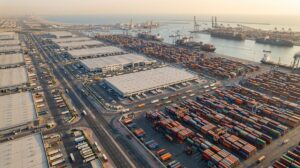
By Sea, to Jebel Ali Port
| Chinese port | Region it serves | Typical sailing time to Jebel Ali |
|---|---|---|
| Shenzhen (Yantian, Shekou) | Guangdong, Pearl River Delta | 14 to 20 days |
| Guangzhou (Nansha) | Guangdong, Foshan furniture hub | 15 to 20 days |
| Xiamen | Fujian | 16 to 22 days |
| Shanghai | Yangtze River Delta | 18 to 24 days |
| Ningbo | Zhejiang, including Yiwu goods | 18 to 24 days |
| Qingdao | Shandong, northern China | 20 to 26 days |
| Tianjin | Beijing and northern China | 22 to 28 days |
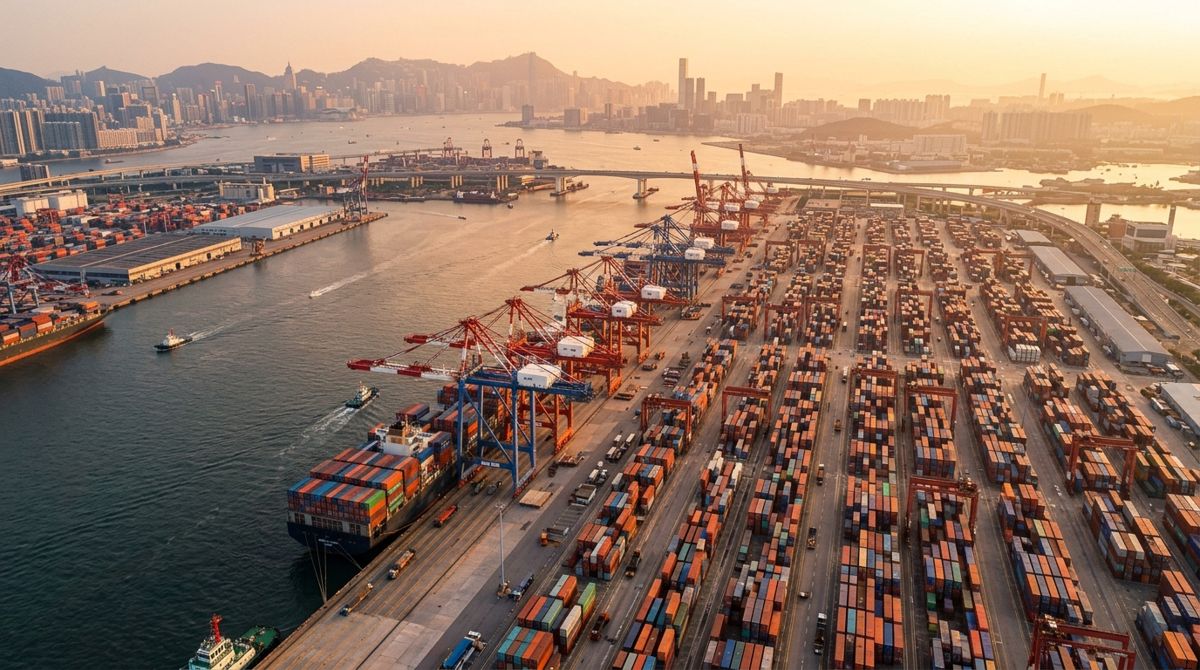
Add about 5 to 10 days for factory pickup, export clearance and loading in China, plus 2 to 5 days for customs clearance and delivery from Jebel Ali Port. Southern ports are usually the fastest because they are closest to the Gulf.
By Air, to Dubai
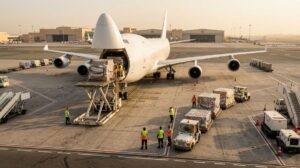
Direct cargo flights from Shanghai, Guangzhou, Shenzhen, Beijing and Hangzhou reach Dubai in about 8 to 9 hours. With pickup, export clearance and UAE customs, most air shipments are delivered in 4 to 8 days door to door.
These times are typical, not guaranteed. Chinese New Year (late January to February) and the pre-Ramadan rush slow everything down, so book early around those dates.
How Shipping Costs from China to Dubai Are Calculated
Freight rates on this lane change every week with fuel prices, demand and carrier space, so treat any price you see online as a guide only. What stays the same is how the cost is built.
Sea Freight FCL
You pay a fixed price per 20ft or 40ft container for the ocean freight, plus:
- Origin charges in China: terminal handling, documentation, export customs
- Destination charges at Jebel Ali: terminal handling, delivery order fee
- UAE customs clearance, duty and VAT
- Trucking from the port to your warehouse
A 40ft container holds about twice the volume of a 20ft but usually costs much less than double, so it is often the better value for large orders.
Sea Freight LCL
You pay per cubic metre (CBM) or per 1,000 kg, whichever is higher, plus consolidation (CFS) charges at both ends. LCL is ideal for small orders, but fixed charges make it expensive below about 2 CBM.
Air Freight
You pay per kg of chargeable weight: the higher of the actual weight and the volumetric weight (length × width × height in cm ÷ 6000). The rate per kg drops at 45, 100, 300 and 500 kg. We explain the formula with a worked example in our air cargo guide.
Incoterms: Who Pays for What
The Incoterm on your supplier’s invoice decides where their responsibility ends and yours begins. Getting it wrong is the most common source of surprise charges.
| Incoterm | Supplier pays up to | You pay from | Good for |
|---|---|---|---|
| EXW (Ex Works) | Goods ready at the factory | Pickup, export clearance, freight, everything after | Buyers with a forwarder in China |
| FOB (Free on Board) | Goods loaded on the ship at the Chinese port | Ocean freight, Dubai charges, customs, delivery | Most importers; you control the freight |
| CIF (Cost, Insurance, Freight) | Freight and insurance to Jebel Ali | Dubai port charges, customs, delivery | Buyers who want the supplier to book shipping |
| DDP (Delivered Duty Paid) | Everything to your door, including duty | Nothing extra, in theory | First-time buyers, small orders |
Our advice: buy FOB and appoint your own forwarder. You see the real freight cost, and avoid the inflated destination charges that often come with CIF shipments.
Documents and UAE Customs Clearance
| Document | Issued by | Notes |
|---|---|---|
| Commercial invoice | Supplier in China | Must show the full value, currency, Incoterm and a clear description of each item |
| Packing list | Supplier | Cartons, weights and dimensions; must match the invoice |
| Bill of lading (sea) or air waybill (air) | Carrier or forwarder | Proof of shipment; needed to release the cargo in Dubai |
| Certificate of origin | Chinese chamber of commerce (CCPIT) | Usually required by UAE customs for imports |
| Importer code | Dubai Customs | Your company must be registered as an importer, or use your forwarder’s code where allowed |
| Permits | UAE authorities | Only for controlled goods such as food, cosmetics, medicines, chemicals or telecom devices |
Duty and VAT
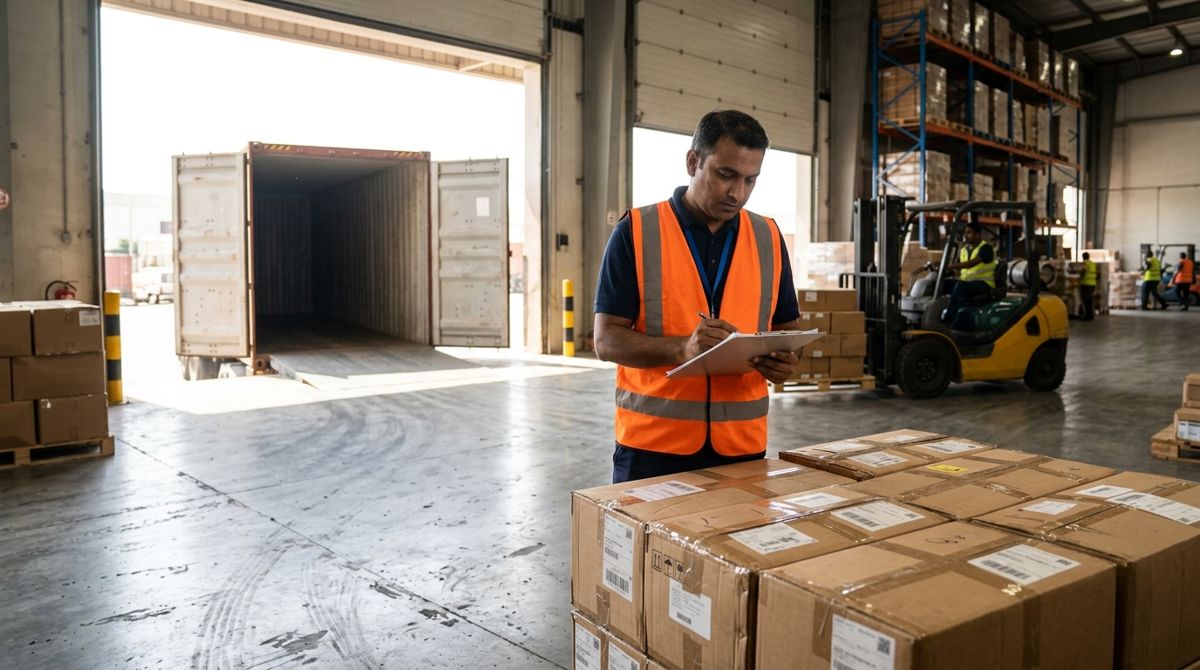
Most goods imported into the UAE pay 5% customs duty on the CIF value (cost of goods + insurance + freight), plus 5% VAT. Some goods such as tobacco and alcohol pay higher rates, and some essentials are exempt. Goods going into a free zone, or passing through Dubai for re-export, can be handled without paying UAE duty.
How Clearance Works
- Your forwarder files the import declaration with Dubai Customs once the ship or flight arrives.
- Customs checks the documents and may inspect the cargo.
- Duty, VAT and port charges are paid.
- The cargo is released and delivered to your warehouse.
With correct documents, clearance at Jebel Ali usually takes 1 to 2 working days.
How to Ship from China to Dubai: Step by Step
- Get your supplier’s details. Factory address, cargo ready date, carton count, weight, CBM and the Incoterm.
- Request a quote for sea and air so you can compare total landed cost.
- Book the shipment. Your forwarder arranges pickup from the factory or receives the goods at its warehouse in China.
- Export clearance and loading at the Chinese port or airport.
- Transit to Jebel Ali or Dubai airport, with tracking updates.
- UAE customs clearance: duty and VAT paid, cargo released.
- Delivery to your warehouse or shop anywhere in the UAE.
6 Ways to Cut Your Shipping Cost from China
- Consolidate orders from several suppliers into one container instead of shipping LCL from each.
- Choose the right container: above about 15 CBM, a 20ft is often cheaper than LCL; above about 30 CBM, look at a 40ft.
- Buy FOB, not CIF, so you control and see the freight cost.
- Book early before Chinese New Year and peak season, when rates jump and space disappears.
- Pack efficiently: smaller, stackable cartons reduce CBM and volumetric weight.
- Get the documents right first time to avoid storage and demurrage charges at Jebel Ali.
Ship from China to Dubai with Alliance Shipping
Alliance Shipping offers sea and air freight services that can help when you weigh sea vs air freight from China to Dubai.
- Sea freight FCL and LCL shipping
- Air freight
See our cargo from China to Dubai service page for more details.
Request a Quote from China
Send us your cargo details to request a quote.
Call or WhatsApp +971 56 649 5103 · manager.dxb@theallianceshipping.com
Frequently Asked Questions
Which Is Better: Sea vs Air Freight from China to Dubai?
Sea freight is better for heavy, bulky or large orders where cost matters most. Air freight is better for urgent, light or high-value goods. Compare the total landed cost per unit for your order.
How Long Does Shipping from China to Dubai Take by Sea?
The sailing to Jebel Ali takes about 14 to 28 days depending on the Chinese port. Door to door, plan for about 3 to 5 weeks for FCL and 4 to 6 weeks for LCL.
How Long Does Air Freight from China to Dubai Take?
The flight is about 8 to 9 hours. Door to door, most air shipments arrive in 4 to 8 days.
How Much Customs Duty Do I Pay in Dubai on Goods from China?
Most goods pay 5% customs duty on the CIF value plus 5% VAT. Some goods have different rates or need permits, so check before you order.
What Is the Minimum for LCL Shipping from China to Dubai?
Most forwarders charge a minimum of 1 CBM. Below about 2 CBM, compare LCL with air freight or courier, as fixed charges make small LCL shipments expensive.
Can a Forwarder Collect Goods from My Supplier’s Factory in China?
Many forwarders can arrange factory pickup in China through partners there. Ask your forwarder whether they cover your supplier’s city before you agree the Incoterm.